


#shedding-light-on-sterilization-sustainability-218116
Shedding Light on Sterilization Sustainability
BRIGHT IDEAS FOR THE FUTURE

▪ Gamma sterilization is a more energy-efficient “light source.”
▪ X-ray is more energy intensive, its carbon footprint can be lowered with the use of renewable energy.
▪ This study is based on exploratory Life Cycle Assessment (LCA).
#general-text-217981
WHY THIS STUDY? LET'S ILLUMINATE THE FACTS
Single-Use Technologies (SUT) in Biopharma need irradiation sterilization before they can shine.
Gamma sterilization (Co-60) has long been the gold standard, but with growing demand, the industry is searching for another alternative—X-ray!
Objective: To measure the environmental footprint of both methods and
highlight the most sustainable path forward.
▪ Scope of this study: Gate-to-gate LCA—covering the sterilization process only.
▪ Functional Unit: Sterilization of 1 metric ton of SUT material at 0.2 g/cm³ density to 25 kGy dose.
▪ Tools Used: Sphera GaBi software + Ecoinvent v3.8 database.
#general-text-218091
ENERGY SPOTLIGHT: WHO BURNS BRIGHTER?
X-RAY | GAMMA |
|---|---|
| Cumulative Energy Demand (CED) • X-ray: ~2500 MJ-eq per kg SUT sterilized (~100x higher) Global Warming Potential (GWP) • X-ray: ~100kg CO2-eq per kg SUT sterilized (A Heavier Carbon Footprint) | Cumulative Energy Demand (CED) • Gamma: ~25 MJ-eq per kg SUT sterilized (Efficient Glow) Global Warming Potential (GWP) • Gamma: Only ~1kg CO2-eq per kg SUT sterilized (Tiny Carbon Shadow) |
#general-text-218096
LCA results for cumulative energy demand (CED) and global warming potential (GWP) for sterilization methods in the United States and Switzerland locations.
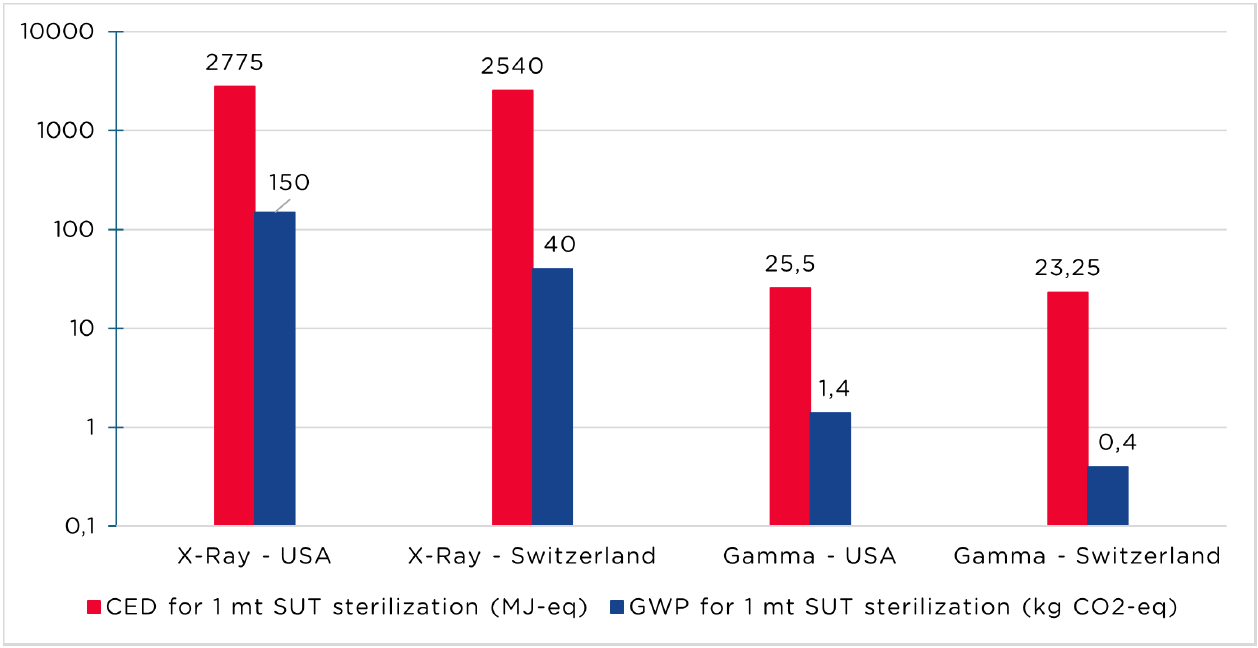
Note: the gamma plot axes (right) are at 1/10th the scale of the X-ray plot axes (left).
Source: Environmental Impacts of Gamma vs X-Ray Irradiation: an LCA Approach, Robert Barrentine, 2023.
#general-text-217991
POWER SOURCE: WHAT FUELS THE GLOW?
Electricity Mix Matters:
▪ U.S. Grid: 69% fossil-based (coal, gas), leading to higher emissions.
▪ Switzerland Grid: 55% hydro, 37% nuclear, meaning lower carbon footprint.
#general-text-218101
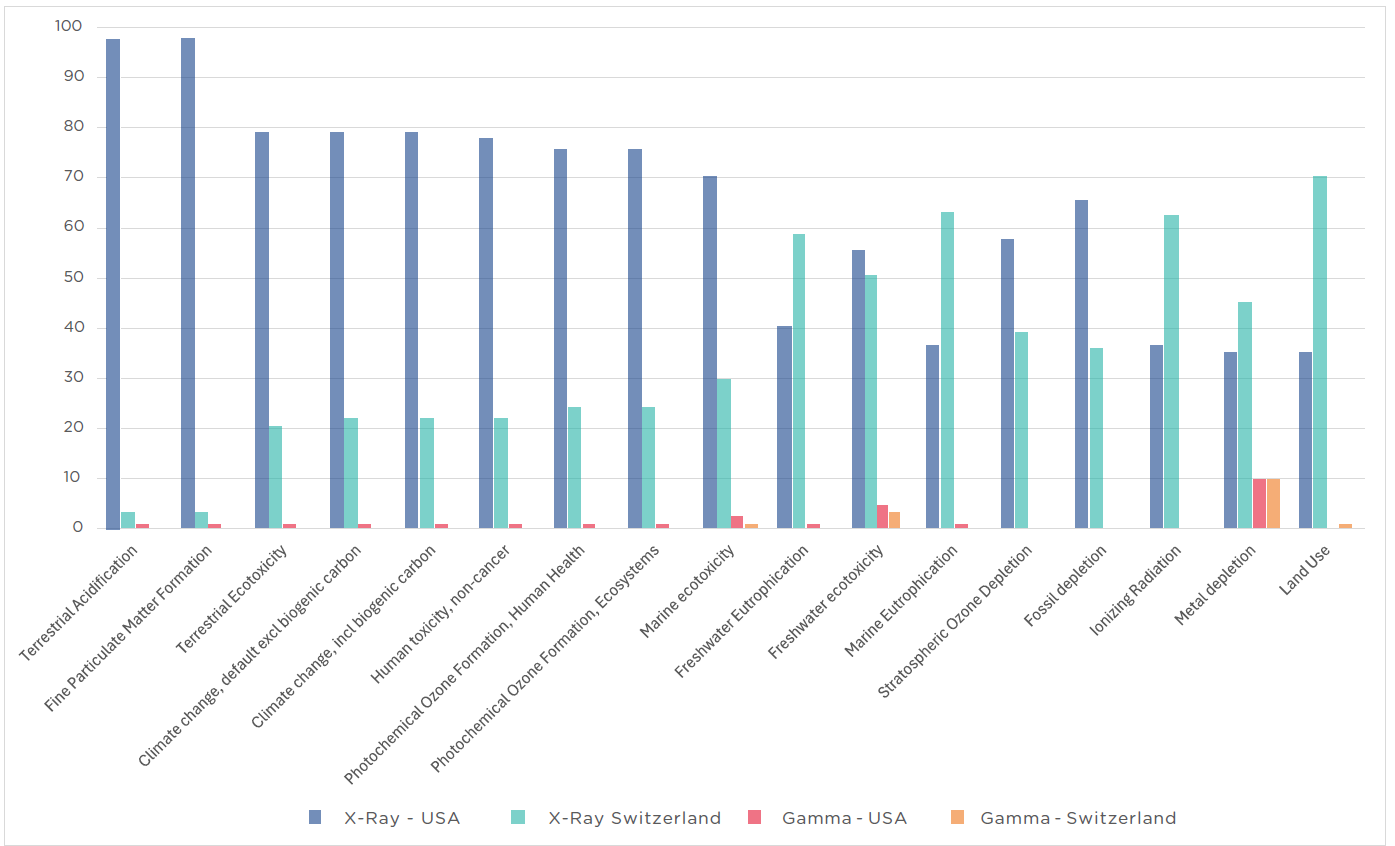
Assessment result for each scenario plotted by contribution
 |
Source: Environmental Impacts of Gamma vs X-Ray Irradiation: an LCA Approach, Robert Barrentine, 2023.
#general-text-217996
A CLOSER LOOK AT OTHER ENVIRONMENTAL IMPACTS WHERE DO IMPACTS COME FROM DURING STERILIZATION?
▪ Sterilization = Only ~1% of Total Life Cycle Impact of Single-Use Technologies (SUTs)
▪ While this study did not concentrate on transportation, it is still the main polluting step (Scope 3 emissions) - Source.
▪ X-ray: Higher impacts across all categories due to its energy-hungry nature.
▪ Gamma: Lower impact overall, but Co-60 mining (supply consistency challenge, see graph) & radioactive waste disposal create dark spots.
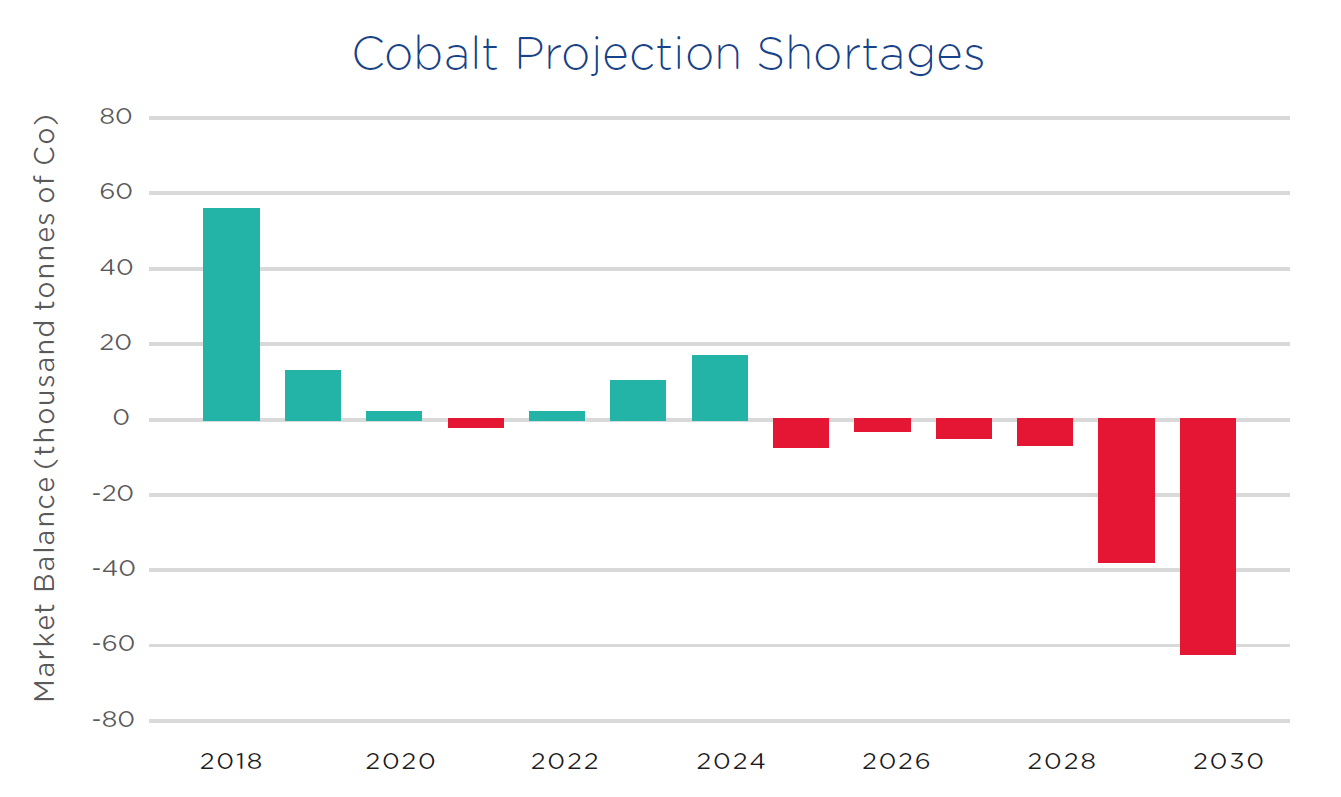 |
Source: Cobalt: supply and demand balances in the transition to electric mobility, European Union, 2018, link
#general-text-218001
DECARBONIZING THE VALUE CHAIN: AREAS FOR IMPROVEMENT

▪ Optimize energy use at sterilization facilities.
▪ Shift to low-carbon or renewable energy sources.
▪ Localize production & sterilization facilities to cut transportation impacts.
#general-text-218006
LEARN MORE
▪ Check out the Saint-Gobain Bioprocess Solutions website sustainability section
▪ Environmental impact of Gamma versus X-ray irradiation sterilization poster
▪ Part 1: Industry Need, Requirements & Risk Evaluation BPSA white paper
▪ Part 2: Representative Qualification Data BPSA white paper
▪ Download the Life Cycle Assessment: X-ray vs. Gamma infographic
#general-text-218011
ENGAGE MORE
▪ Any questions? Contact us at [email protected]
▪ Contribute to the Biopharma decarbonization approach by engaging in the Scope 3 working group by contacting [email protected].
#faqs-218521
FAQs
Why the comparison between Switzerland and Illinois in USA?
Switzerland and Illinois were chosen as sterilization locations in this LCA to align with publicly available data on gamma and X-ray irradiation sterilization capabilities at the time of the study. Since the study was completed, additional countries and regions now offer both technologies including Asia and other European countries. For the purposes of this study, North America and Europe were considered primary regions where sterilization services are utilized. The two locations used in the study were based on real-world sterilization sites operated by Steris.
Why focus the LCA around sterilization?
The focus on conducting a Life Cycle Assessment (LCA) of only the sterilization process was chosen to provide a clear, detailed understanding of the environmental impact of this specific step in the overall biopharmaceutical manufacturing process. While sterilization represents just one part of the larger life cycle of the Single Use Technology, it is a critical step that involves significant energy use and resource consumption, making it an important area for sustainability improvements. By isolating this process, we can gain valuable insights and identify opportunities for optimization that may have a broader impact on sustainability within the pharmaceutical industry. While it may seem like a small portion of the total lifecycle carbon footprint, focusing on sterilization allows us to pinpoint areas for improvement that could lead to substantial environmental benefits when scaled.
Is the extraction of Cobalt and production of X-ray taken into account?
The study does account for the extraction and processing of cobalt as well as the conversion of electricity into photon irradiation for X-ray. The full life cycle of Cobalt-60 production - covering its extraction, refinement, use, and end-of-life disposal - is covered in the life cycle inventory of the study. Likewise, the generation of X-rays via conversion of electron beams into photon irradiation, accounting for the electricity consumption and necessary cooling water usage, is also considered in the life cycle inventory. These elements are key contributors to the overall environmental impact assessed in the LCA.